On Saturday morning, June 15th, my grandmother passed away at the age of 94. I've been really struggling with this loss for several reasons, but the loss isn't supposed to be easy. It's a part of life that we all will someday face, and it's unavoidable.
While this is a tragically, heartbreaking time for our family, it also presents an opportunity to discuss how best to handle situations like this. I want to pose an important question to my fellow Autism and/or Special Needs parents out there.
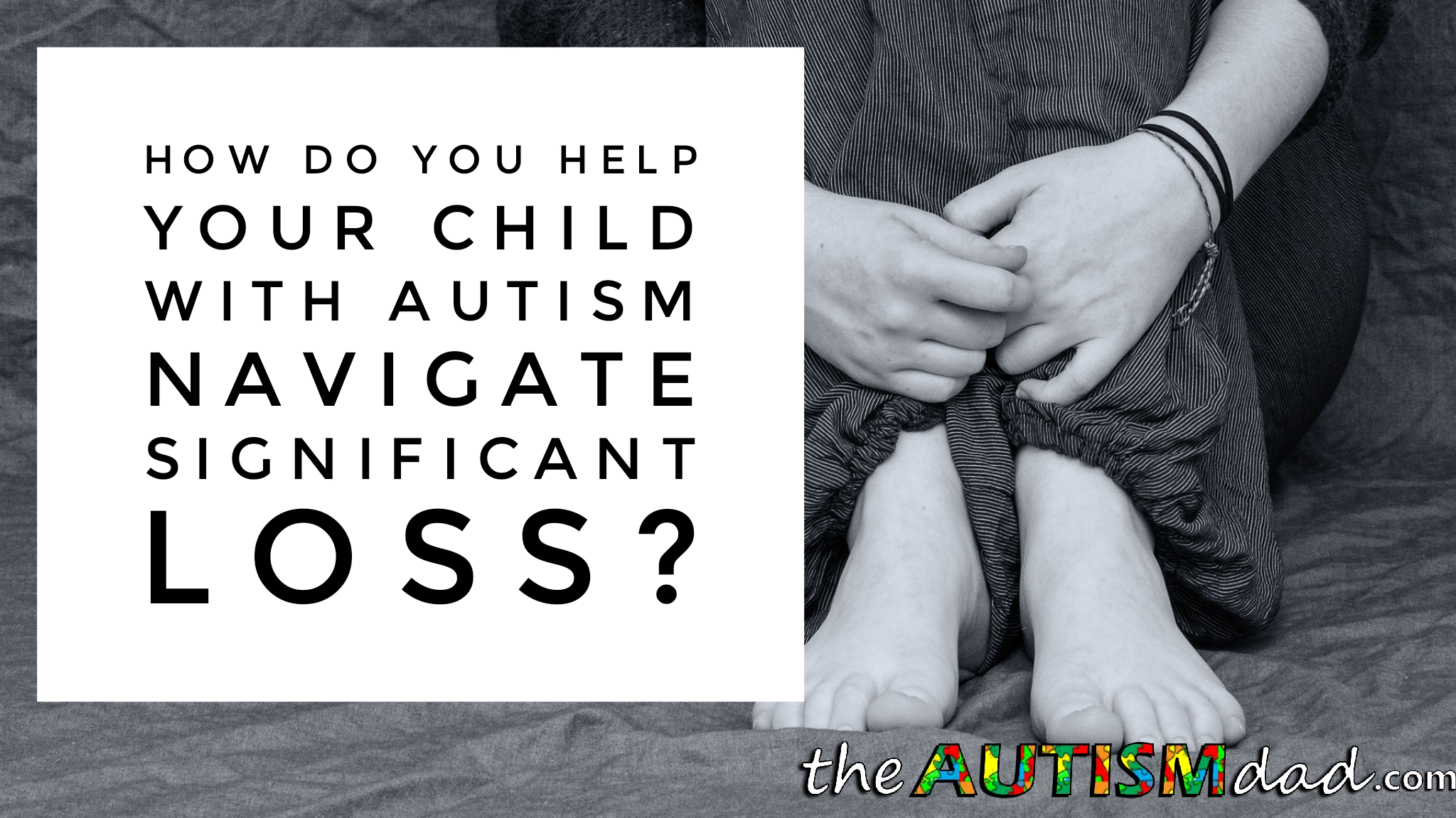
*How do you help your Autistic or Special Needs child navigate significant loss?*
No one is given an instruction manual when they first become a parent. Being a parent is an awesome responsibility, and when things like Autism are added to the mix, it becomes a formidable challenge as well.
An instruction manual would be a great reference, but since they don't exist, we are forced to get by doing the best we can in the moment.
One of the things that no parent is prepared for is helping their child navigate a significant loss. What qualifies as a *significant loss *is obviously subjective, but regardless of what the loss is, how are we supposed to help our Autistic or Special Needs kids get through it?
My wife and I are still very much learning as we go. We make mistakes, some of which are doozies, and all we can do is learn while continuing to move forward.
When it comes to significant loss, it's so hard to know what the right thing to do is.
We've lost three grandparents in the last nine months, and that's been very hard on everyone. My grandmother passed away yesterday (June 15, 2019), and figuring out how to help the kids through this has been challenging.
Until very recently, we've shielded them from as much of this type of thing as possible. We would not allow them to attend funerals because we knew that emotionally, they wouldn't be able to process what was happening, or worse, they would be traumatized by it. We've already been down that road a few times.
Elliott still sleeps next to the collar of my parent's dog, that died several years ago, and cries when you bring it up. My kids tend to hold on to this type of loss and become consumed by it. They're in therapy, but that doesn't always help.
What we've learned through countless mistakes, is that shielding them from these emotional situations isn't always the right thing to do. Once they were older, and after long conversations with their therapist, we decided to take a *follow their lead *kind of approach.
If they wish to attend a funeral, we allow it. At the same time, we make sure that we have buffers in place and our kids can pull the plug at any time. If they are uncomfortable going, we support that as well.
Sometimes we will have to decide to distance them from certain situations, but we need to be more open to allowing them to experience things like funerals. It probably won't be easy for any of us and the fallout could be significant, but that's all part of life. If we continue to rob them of experiences that are difficult or unpleasant, how will they learn to navigate these things as they get older?
Obviously, every child is unique, and every situation is different. There is not necessarily a right or wrong approach.
We told the kids that if they wanted to go to my grandmother's funeral, that would be okay. We also told them that if they didn't want to go, that would be equally okay as well.
At this point, it looks like Emmett is on the fence, but the others are not comfortable going. There's no pressure either way. We will support them no matter what.
When it comes to your kids with Autism and/or Special Needs, how do you navigate these types of situations? What has your experience been? Do you have any advice?